Road closure and parking permits for Manor House
Posted on 06/07/2026
If you are planning a move in Manor House, one of the quickest ways to derail an otherwise smooth day is a blocked road, an awkward loading bay, or a permit issue you only notice when the van is already outside. Road closure and parking permits for Manor House sound like admin, but in real life they decide whether your move runs on time or turns into a stressful shuffle of double parking, apologising to neighbours, and carrying a wardrobe down the road in the rain. Truth be told, a little planning here saves a lot of hassle later.
This guide explains how road closure and parking permits for Manor House work in plain English, why they matter, who needs them, and how to plan your move without getting caught out. Along the way, you will find practical steps, common mistakes, a realistic comparison of options, and a checklist you can actually use. If you are also organising packing, decluttering, or a tight moving schedule, you may find it useful to read the ultimate guide to moving house with ease and the Manor House essentials checklist for moving in N4.
- Why it matters
- How it works
- Key benefits
- Who needs this
- Step-by-step guidance
- Expert tips
- Common mistakes
- Tools and resources
- Compliance and best practice
- Options and comparison
- Real-world example
- Practical checklist
- Conclusion
- Frequently asked questions
Why Road closure and parking permits for Manor House Matters
Manor House is one of those parts of North London where the street layout, traffic flow, and parking pressure can make a straightforward move feel surprisingly fiddly. Even when the actual journey is short, the final few metres can be the hardest part. A van may need to stop close to the property for a sofa, bed frame, fridge, or office desk. If the road is restricted, narrow, or temporarily closed, that simple stop becomes a problem very quickly.
Road closure and parking permits for Manor House matter because they protect three things at once: access, safety, and timing. Access means your removals team can load and unload efficiently. Safety means fewer risky manoeuvres in busy streets or around pedestrians. Timing means you avoid delays that can ripple through the whole day. And if you are on a tight handover deadline, those minutes matter more than people expect.
There is also the local reality of shared streets. In many London moves, the challenge is not just your own doorstep. It is neighbours trying to pass, delivery drivers pausing, school-run traffic building up, and someone trying to reverse into the only sensible space on the road. That is why many people choose to organise permits early rather than leave it until moving morning.
For many households, the issue is connected to the wider moving plan. If you are trying to move a flat, clear bulky furniture, or schedule a same-day job, a permit conversation should happen early. Our guide to avoiding Haringey Council fines when moving in Manor House is a useful companion read if you want to understand the practical risk side.
How Road closure and parking permits for Manor House Works
At a basic level, a parking permit is formal permission to place a vehicle in a specific location or within a controlled parking area for a defined purpose and time. A road closure permit, or temporary closure arrangement, is used when access to part of a road needs to be restricted so work, deliveries, removals, or another planned activity can happen more safely. The details vary depending on the street, the time of day, and the nature of the job.
In Manor House, the important thing is to treat the road as a shared space rather than an extension of your driveway. If your vehicle will occupy a bay, block a narrow lane, or need extra space for ramps and trolley movement, permits may be necessary. Some jobs can be managed with careful parking and short loading windows. Others, especially larger house moves, flat moves, piano moves, or office relocations, are much easier with proper arrangements in place.
The process is usually more manageable than it sounds. You identify the type of access needed, estimate the vehicle size and duration, confirm the loading/unloading point, and then make sure any parking or closure arrangement matches the reality on the day. In practice, that means thinking about the van height, the distance to the front door, whether there is a lift, and whether the road is likely to be busy at your chosen time.
A small but important point: some people assume a parking space is enough. It often is not. A space may still be too far from the entrance, which turns a five-minute unload into repeated trips with heavy boxes. If you are dealing with flat removals, this is especially noticeable. It is worth reviewing flat move van tips for Seven Sisters Road and Manor House if your move involves tight access or busy roadside loading.
Key Benefits and Practical Advantages
The biggest benefit is obvious: less stress. But the real advantages go beyond peace of mind.
- Faster loading and unloading: the closer the van can park to the entrance, the less time is spent carrying items.
- Lower risk of penalties or complaints: proper planning helps you avoid parking disputes, obstruction issues, and last-minute improvisation.
- Safer handling of furniture: fewer long carries mean less strain on lifting teams and less chance of damage to items or walls.
- Better coordination with movers: once access is settled, the team can focus on protecting floors, wrapping items, and moving efficiently.
- Less disruption to neighbours: a considered plan feels more respectful and reduces frustration on the street.
There is also a commercial benefit if you are comparing removal services. A move with proper access planning is easier to quote accurately, and that usually helps you make a better decision about van size, crew size, and timings. If you want a wider sense of what can be arranged around your move, have a look at the services overview and pricing and quotes information.
To be fair, there is something reassuring about watching a move happen in an orderly way. The van arrives, the route is clear, boxes move without drama, and before you know it the kettle is going on in the new place. That is the standard you are aiming for.
Who This Is For and When It Makes Sense
Road closure and parking permits for Manor House are relevant to more people than you might think. They are not only for large-scale removals or construction work. In everyday moving life, they can matter for:
- homeowners moving house
- tenants moving in or out of flats
- students with small but awkward loads
- office teams relocating equipment
- people moving heavy furniture or appliances
- anyone using a removal van on a busy street
- landlords or agents arranging access for a property handover
This matters most when the street is narrow, parking is limited, or the building entrance sits away from the roadside. You may also need to think about permits if your move involves awkward items such as pianos, large sofas, beds, or white goods. For those situations, a permit can make the difference between a smooth unload and an exhausting workaround. If that sounds familiar, our pages on piano removals in Manor House and furniture removals in Manor House may help you plan more confidently.
Students moving into shared houses often underestimate this. A few boxes, a suitcase, maybe a desk, and then suddenly the van has nowhere obvious to stop. Likewise, office moves can go sideways if a delivery lift is not available or the front bay is already occupied. If you are in a hurry, you might also look at same-day removals in Manor House to see how time-sensitive moves are usually handled.
Step-by-Step Guidance
Here is a practical way to think through the process without overcomplicating it.
- Map out the exact loading point. Do not just think "outside the property". Work out the best spot for the van, the safest pedestrian route, and the distance to the entrance.
- Check whether parking alone is enough. Sometimes a short loading stop will do. Sometimes you will need a formal parking arrangement or a temporary access restriction.
- Match the permit to the vehicle and the job. A small van, a medium removal vehicle, and a larger removal lorry are not the same thing. Neither is a 20-minute unload and a half-day house move.
- Build in buffer time. Traffic, keys, lift delays, and weather all eat into moving schedules. A morning start can be easier than a late afternoon one, especially if the road gets busier later.
- Confirm the access plan in writing. Even if the details are simple, keep the date, time, vehicle size, and loading instructions written down. That tiny step can save a lot of awkwardness.
- Tell neighbours if the street will be busy. A heads-up goes a long way. People are usually more understanding when they know what is happening.
- Prepare for the handover. Once the permit or closure plan is sorted, focus on packing, dismantling, and labelling so the day itself runs cleanly.
If you want to get the moving side of the process in good shape, this is the point where packing and boxes in Manor House and packing efficiently for a new home become genuinely useful rather than just nice-to-have reading.
One practical note from experience: the best moving plans are the boring ones. Nothing flashy. Just clear access, clear labels, and no surprises. Sounds simple because it is simple, although not always easy on a moving day.
Expert Tips for Better Results
Small decisions can improve the whole day more than people expect. Here are the ones that tend to make the biggest difference.
- Choose the quietest practical window. Early morning is often calmer than midday, especially in busier parts of London.
- Keep bulky items first in the load order. Sofas, beds, and wardrobes should usually be moved before the smaller boxes pile up and block the route.
- Protect the building and the street. Floor runners, corner guards, and sensible lifting paths are not glamorous, but they save damage claims and grumbles.
- Use the right team size. A permit helps access, but it does not replace enough hands. Heavy jobs need proper lifting support.
- Allow for awkward items. Fridges, mattresses, and pianos do not move like tidy cardboard boxes. They need space, patience, and sometimes specialist handling.
You will also be better off if you clear out what you do not need before moving day. Fewer items means less loading time, less parking pressure, and a lower chance of needing extra trips. A straightforward decluttering session can make the permit issue much less demanding, so it is worth reading how to declutter before relocating.
And yes, label your boxes properly. People forget this all the time and then stand in the hallway asking where the kettle is. We have all seen it happen.
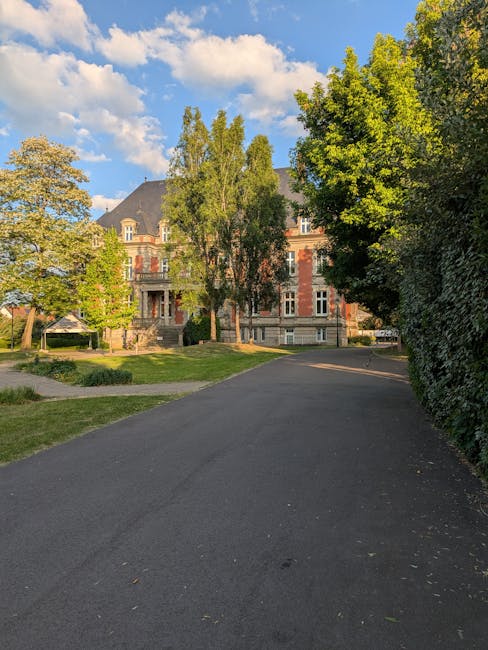
![A large historic manor house with stone walls, multiple towers, and chimneys situated in a spacious, well-maintained lawn. The building is partially shaded by large trees with green foliage, and a clear blue sky with wispy clouds is visible overhead. The scene depicts a peaceful and traditional setting, typical of a heritage property that may require professional house removal or moving services. In the foreground, there are no visible vehicles or furniture, but the surrounding area suggests preparations for furniture transport or home relocation. The manor house's exterior shows windows and architectural details consistent with a period estate, with the environment lit by natural daylight. This scene aligns with the context of planning a move or loadings, such as loading furniture into a van outside the property, which is relevant to [COMPANY_NAME]’s removals services on the page about road closure and parking permits for Manor House.](/pub/blogphoto/road-closure-and-parking-permits-for-manor-house2.jpg)
Common Mistakes to Avoid
Most permit and access problems come from a handful of familiar mistakes.
- Leaving it too late: this is the classic one. By the time you notice the issue, the date is already fixed.
- Assuming a van can just "find somewhere": in Manor House, that can be optimistic at best.
- Forgetting about road width: a space may exist, but can the van actually stop there without blocking traffic?
- Not checking building restrictions: some flats and managed properties have their own rules on access or loading.
- Underestimating how long unloading takes: ten boxes are quick; ten boxes plus a sofa, mattress, and chest of drawers is not.
- Ignoring the weather: wet pavements, wind, and dark evenings make carrying awkward items slower and riskier.
There is another subtle mistake: thinking the permit is the whole job. It is not. The permit is there to support a good move, not to replace proper packing, clear timing, or enough people on site. If your move includes awkward furniture, the article on bulky item removal in Manor House is well worth a look.
And here is a small human truth: the last 15 minutes before the van arrives are often the most chaotic. The phone is ringing, someone cannot find keys, and the tape dispenser has vanished. So build slack into the plan. Seriously.
Tools, Resources and Recommendations
You do not need fancy systems to manage this well. A few practical tools go a long way:
- Room-by-room checklist: helps you track what is packed and what still needs attention.
- Van access notes: write down entrance details, door codes, lift access, and loading instructions.
- Box labels and marker pens: a simple colour code by room can make unloading much easier.
- Measuring tape: useful for checking furniture clearance and van access near tight corners.
- Phone photos: a quick picture of the access point or awkward stairway can help movers prepare.
For people who want a more joined-up move, it also helps to think beyond the permit itself. Storage can be useful if your moving dates do not line up cleanly, and a removal van can be the difference between a one-trip move and a messy back-and-forth day. Helpful pages include storage in Manor House and removal van hire in Manor House.
If you are trying to move on a tight deadline, you may also want to read same-day Manor House removals availability and fees. It gives a better sense of the trade-offs involved when time is short.
Law, Compliance, Standards, or Best Practice
When road closure and parking permits for Manor House are involved, the safest approach is to treat them as a compliance issue as much as a convenience issue. Local parking restrictions, temporary access needs, and road occupancy decisions are not things to guess at. If a permit or closure is needed, it should be arranged properly and in line with the relevant local process. Where the exact rules are uncertain, it is best to confirm them directly before moving day rather than rely on assumptions.
In practical terms, good compliance means a few straightforward habits:
- check whether the street has parking restrictions during your planned time
- allow enough lead time for any permit request or access arrangement
- make sure the vehicle size matches what is permitted
- keep documentation or confirmation readily available
- avoid blocking dropped kerbs, crossings, or entrances
Best practice in removals is also about safety. Proper lifting, clear walkways, sensible vehicle positioning, and respect for nearby residents all reduce risk. If your move involves awkward or heavy items, the team should be following sensible handling standards, using appropriate equipment, and avoiding shortcuts. Our health and safety approach and insurance and safety information are useful references for the broader standards you should expect from a professional move.
One more practical point: if you are disposing of waste or old furniture at the same time, permit planning may need to be joined up with skip or waste arrangements. That is where a little extra coordination pays off. See Haringey Council skip permits for Manor House moves for the sort of crossover that often gets overlooked.
Options, Methods, or Comparison Table
There is no single best option for every move. The right choice depends on street width, vehicle size, timing, and how much furniture you need to move. Here is a simple comparison to help you think it through.
| Option | Best for | Pros | Watch-outs |
|---|---|---|---|
| No formal arrangement | Very small moves with easy access | Quick, low admin | Risky if parking is tight or the street is busy |
| Parking-only arrangement | Short unloads where the van can stop nearby | Simple and practical for many smaller jobs | Still vulnerable to congestion or limited bay availability |
| Temporary road closure or access control | Larger moves, narrow streets, specialist items | Best access, safer handling, easier loading | More planning required, and timing must be exact |
For a family house move, a parking-only arrangement may be enough if the access is straightforward. For a flat on a tight road with stairs, a more robust plan may make much more sense. For office removals, the answer often depends on how many people are entering or leaving the building at the same time. If you are weighing up move types, house removals in Manor House, flat removals in Manor House, and office removals in Manor House are useful comparison points.
Case Study or Real-World Example
Imagine a typical moving day in Manor House. A couple is leaving a two-bedroom flat. They have a sofa, mattress, dining table, boxes, and a small fridge. The road outside is narrow, parking is usually tight, and the nearest sensible stopping point is not directly in front of the building. If the van just arrives and hopes for the best, the crew might have to park further away, carry items longer distances, and work around passing traffic.
Now picture the same move with access planned properly. The loading point is agreed in advance. The van arrives at the right time. The crew knows which items are first out and which boxes go straight to each room. The mattress is wrapped. The sofa is protected. The hallway stays clear. It is not glamorous, but it works.
That kind of move feels calm because the planning absorbed the friction before it became visible. The residents are happier, the movers are less rushed, and the final handover is cleaner. You can almost hear the relief when the last box is set down and nobody has had to apologise to three different neighbours. A very normal London win.
If the move is especially tight on timing, a service like man with a van in Manor House or man and van in Manor House can suit smaller, more flexible jobs. For bigger loads, a full removals service in Manor House may be the better fit.
Practical Checklist
Use this checklist in the week before moving day.
- Confirm the exact moving date and start time
- Check whether the road or bay needs permission or temporary control
- Measure access points, stairwells, and lift size if relevant
- List any bulky items that need special handling
- Book the right van size for the volume of furniture
- Separate essentials from packed boxes
- Label each box by room and priority
- Protect floors, corners, and fragile items
- Tell neighbours if the road may be busy
- Keep keys, contact numbers, and instructions easy to reach
- Allow extra time for traffic, weather, or last-minute delays
If you have not already done the packing side, it is worth reviewing how to move a bed and mattress like a pro and storage solutions for sofas so those larger items do not become the stressful bit.
And if you are trying to keep costs under control, remember that a cleaner, lighter move is usually a cheaper move. Fewer trips. Less time. Less chaos. Simple, really.
Conclusion
Road closure and parking permits for Manor House are not just bureaucratic extras. They shape how safely, quickly, and calmly your move can happen. If you get the access plan right, everything else becomes easier: loading is smoother, movers can work properly, and the street is less likely to become part of the problem.
The smartest approach is to treat access and parking as part of the move from the very beginning, not as something to sort out at the last minute. Check the road, plan the van position, keep the schedule realistic, and bring the right support for bulky or awkward items. That is the difference between a frantic day and one that feels controlled enough to breathe through.
Get a free quote today and see how much you can save.
When the boxes are stacked and the kettle is boiling, you will be glad you handled the little details early. Honestly, that calm finish is worth a lot.